Under-eye filler is the single most technically demanding injection on the face — and the area where the gap between a skilled injector and an inexperienced one shows up fastest, most visibly, and longest.
If you’ve spent any time looking into under-eye filler, you’ve probably noticed two very different conversations happening at once. One is full of glowing before-and-afters — tired, hollow eyes transformed into something rested and refreshed. The other is full of warnings: blue-tinted skin, puffy lumps that never go away, photos of “filler gone wrong” that circulate as cautionary tales.
Both conversations are accurate. The under-eye area is capable of producing some of the most natural-looking, confidence-restoring results in aesthetic medicine — and it is also, according to the peer-reviewed literature, one of the most technically demanding and complication-prone regions to inject anywhere on the face.
The difference between those two outcomes isn’t luck. It’s anatomy, technique, and judgment — specifically, whether the person holding the needle (or cannula) understands exactly what’s beneath that paper-thin skin before they ever inject. This guide explains what’s actually happening under there, who tends to do well with this treatment, what can go wrong and why, and how correction works when it does — grounded in the clinical literature, not marketing claims.
Why This Area Is Different From Every Other Filler Site
Most facial filler — cheeks, jawline, lips — is placed into tissue with some margin for error. The under-eye area doesn’t offer that margin, for three specific anatomical reasons that every injector should be able to explain to you before they ever pick up a needle.
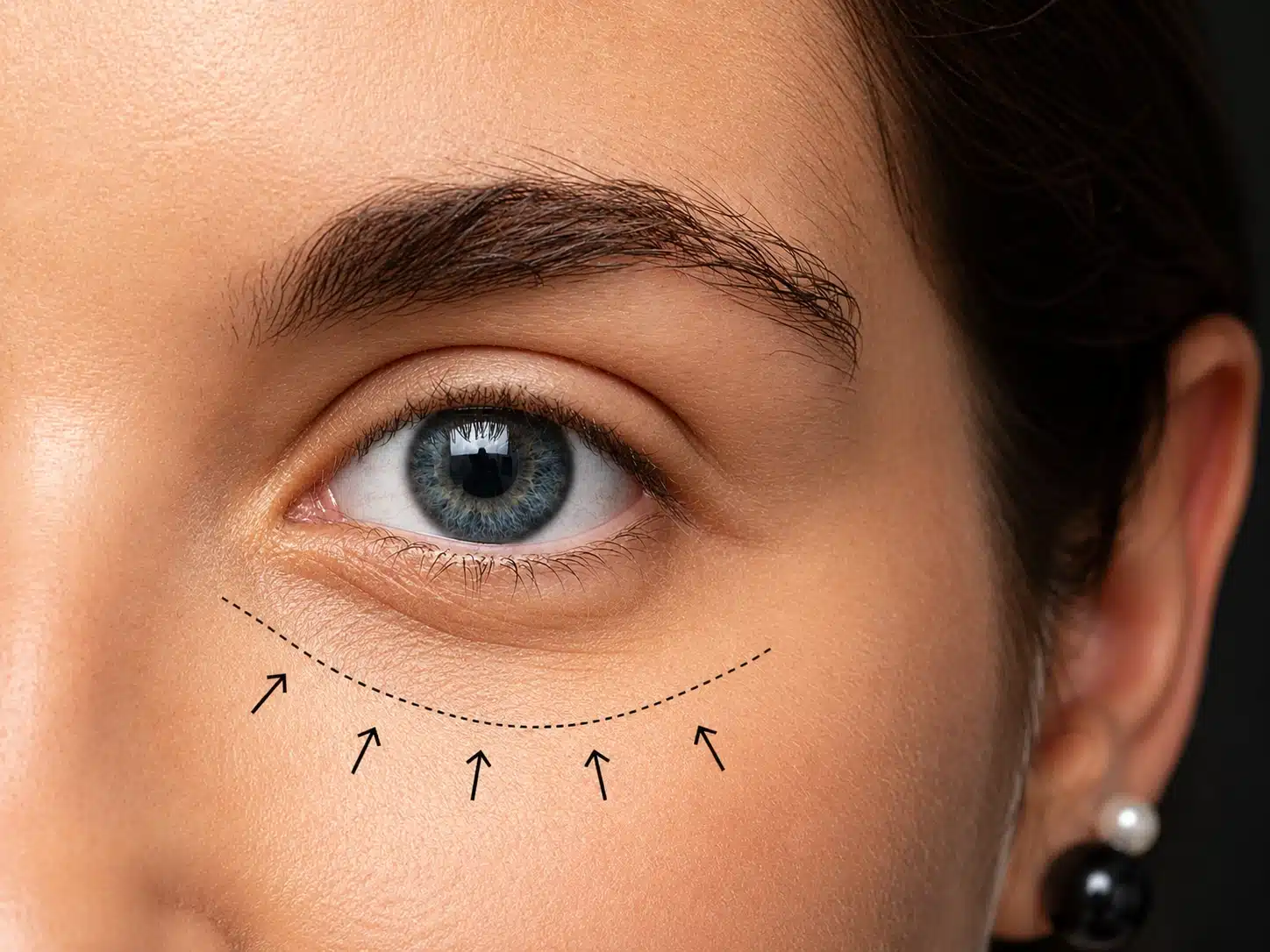
The skin under the eye is roughly a quarter the thickness of cheek skin, with almost no fat layer underneath to soften what’s placed there. That means filler injected even slightly too superficially doesn’t just sit there quietly — it’s visible, and it scatters light in a way that creates a distinct bluish cast known as the Tyndall effect, a well-documented complication tied directly to injection depth.
The infraorbital artery emerges roughly 6–10mm below the orbital rim along the pupil line, and the region around the inner corner of the eye contains a dense network of vessels with direct anatomical connections toward the eye’s blood supply. Peer-reviewed reviews of periorbital filler complications identify this inner-eye zone as a recognized danger area, specifically because of these vascular connections — which is why precise technique here isn’t optional, it’s the entire job.
Areas like the cheek have a natural fat pad that buffers filler and helps it integrate smoothly. The tear trough largely doesn’t. Without that cushioning, both product choice and depth have to be exact — a filler that performs beautifully in the midface can look lumpy or unnatural here.
Clinical Context
Vision loss from filler injection is exceptionally rare — but in a review of documented cases of filler-related vision loss, the tear trough was identified as the injection site in a small percentage of reported cases, alongside the glabella and nasal region as the highest-risk zones on the face. This is not meant to alarm; it’s meant to explain precisely why anatomical knowledge, not enthusiasm, should be the deciding factor in who treats this area.
Who Tends to Get Excellent Results — and Who Doesn’t
Under-eye filler is not a universal fix for “tired eyes.” It corrects a specific structural problem: volume loss that creates a visible hollow or shadow beneath the lower lid, known clinically as a tear trough deformity. It does not correct everything that can make eyes look tired, and understanding that distinction up front is what separates patients who love their results from patients who don’t.
Good Candidates
- A visible hollow or shadow directly under the eye, often more noticeable when tired or under certain lighting
- Loss of volume in the area without significant excess or sagging skin
- Realistic expectations about subtle, natural-looking correction rather than total transformation
- Good skin elasticity in the treatment area
- No active eye conditions, recent eye surgery, or relevant allergies
Often Poor Candidates
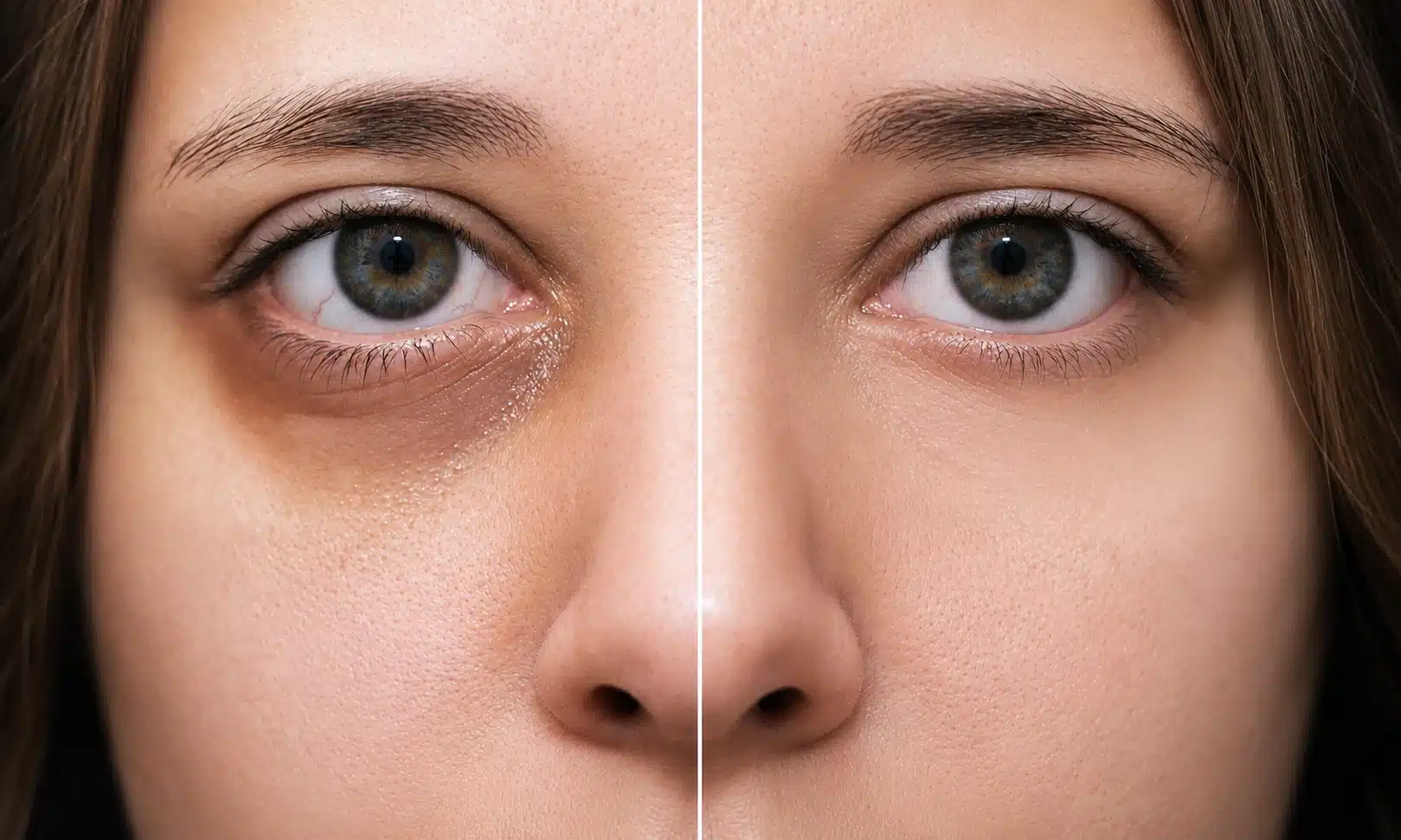
- Primary concern is dark pigmentation rather than hollowing — filler adds volume, it doesn’t lighten skin tone
- Significant under-eye bags caused by fat pad herniation, which filler can sometimes worsen rather than improve
- Substantial loose or crepey skin, which may require a different approach entirely
- A history of poor results from under-eye filler elsewhere without a clear understanding of what went wrong
This is also why a thorough consultation matters more here than almost anywhere else on the face. A provider who looks closely at your specific anatomy — hollowing versus bags versus pigmentation versus skin laxity — before recommending treatment is doing the most important part of the job before a needle ever touches your skin.
What Can Go Wrong, and Why
“Under-eye filler gone wrong” photos circulate widely online, and they tend to share a small number of root causes. Understanding them is the best tool you have for evaluating a provider before you sit down in the chair.
The Tyndall Effect
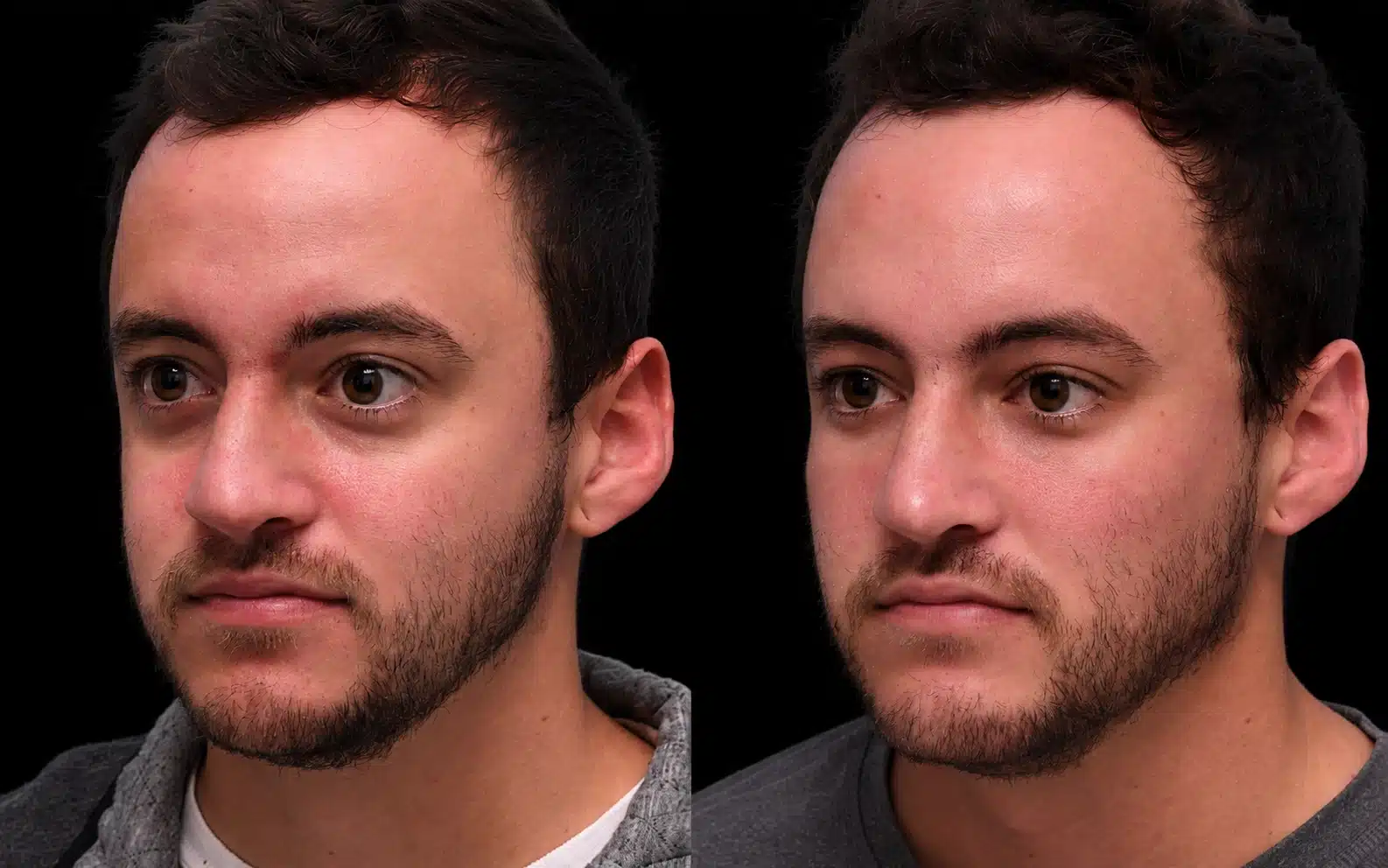
A bluish-gray discoloration that appears when filler sits too close to the skin’s surface and scatters light differently than the surrounding tissue. It is one of the most recognizable and most discussed under-eye filler complications in both clinical literature and patient forums — and it is a depth problem, not a product problem. It does not fade with time the way bruising does, and it requires active correction.
Overfilling and Puffiness
Because the area has so little natural cushioning, even modest overcorrection reads as visible puffiness — sometimes described by patients as looking “tired” in a different way than before treatment, or appearing swollen well past the normal healing window. Clinical reviews of tear trough treatment consistently identify overfilling as one of the most common avoidable complications.
Lumps, Migration, and Asymmetry
Nodules can form when filler isn’t placed evenly or integrates poorly with the thin tissue in this region. Because the area is so mobile — blinking alone happens thousands of times a day — product can also shift gradually if it isn’t anchored at the correct depth, leading to asymmetry between the two sides over time.
When to Seek Immediate Care
Vascular complications from filler are rare, but they are medical emergencies when they occur. Severe, escalating pain during or immediately after injection, sudden blanching or a dusky discoloration of the skin, or any change in vision should be treated as urgent — contact your injector immediately or seek emergency care. This is not a “wait and see” situation, and a provider who takes filler safety seriously will have a clear emergency protocol and be reachable after your appointment.
None of these outcomes are inevitable. The published literature is consistent on this point: complication rates drop substantially when injectors use conservative volumes, choose a filler formulated specifically for thin periorbital skin, and rely on detailed anatomical mapping — including identifying exactly where the infraorbital artery and surrounding vessels sit — before treating.
How a Poor Result Is Fixed
If you’re dealing with the Tyndall effect, puffiness, or lumps from previous under-eye filler — whether from us or elsewhere — the reassuring clinical fact is the same one that applies to filler everywhere else on the face: hyaluronic acid is reversible.
Hyaluronidase, an enzyme that breaks down hyaluronic acid, is the established standard for correcting these complications. In the periorbital area specifically, correction requires the same anatomical precision as the original injection — placing the enzyme at the correct depth relative to where the problem filler sits, since superficial discoloration requires superficial correction while a deeper nodule needs to be addressed at depth.
Most patients see visible improvement within a few days of correction, with results continuing to refine over the following one to two weeks. Depending on how much filler is involved and how it was originally placed, a second session is sometimes needed for full resolution.
If you’re unhappy with under-eye filler placed somewhere else, the most useful first step is a dedicated evaluation rather than asking a new provider to “just add more” or “just fix it” without a clear diagnosis of what’s actually happened. Depth, volume, and product type all change the correction plan.
How We Treat the Under-Eye Area
Because this is the highest-stakes injection site on the face, our approach is deliberately conservative. As an Allergan Diamond provider, we use filler formulations selected specifically for thin, mobile periorbital skin — not general-purpose products repurposed for the area — and we build volume gradually rather than attempting full correction in a single pass.
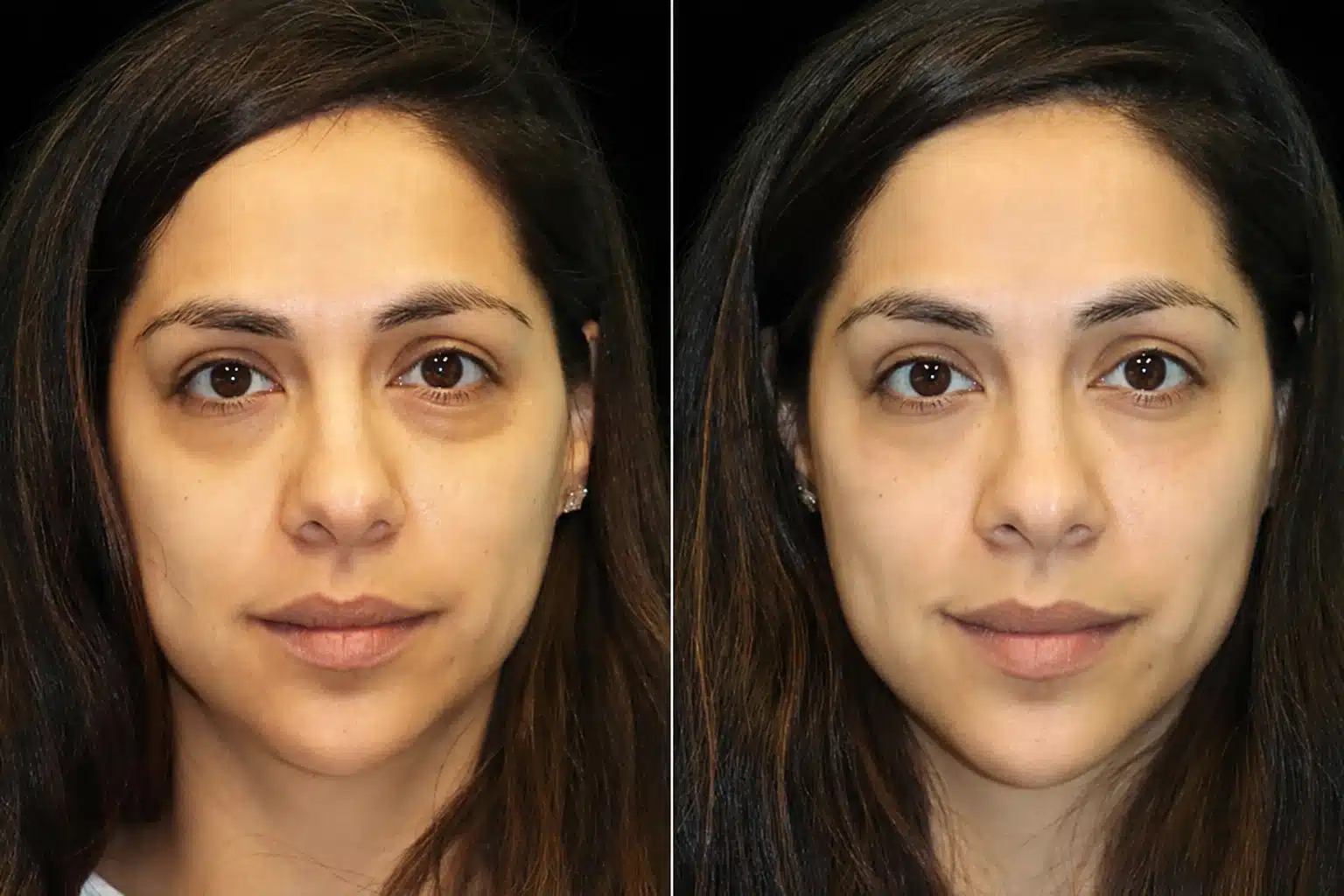
Every under-eye consultation starts with an honest assessment of what’s actually causing the appearance you’re concerned about. If hollowing is the issue, filler is often an excellent solution. If pigmentation, fat herniation, or skin laxity are the primary drivers, we’ll tell you that directly — because the right answer for your face matters more to us than selling a treatment that won’t deliver what you’re hoping for. You can see real results from this approach in our before-and-after gallery.
Portland & Vancouver
Precision work, close to home.
Whether you’re exploring under-eye filler for the first time or you’re looking to correct a result from elsewhere, this is a treatment worth getting a real consultation for — not a quick add-on at the end of another appointment. Under-eye and tear trough filler, along with correction consultations, are available at both our Portland and Vancouver, WA locations.
Considering Under-Eye Filler?
Book a tear trough consultation
Frequently Asked Questions
How painful is under-eye filler?
Most providers use topical numbing cream and fillers that already contain lidocaine, which keeps discomfort minimal for most patients. Some pressure or mild stinging during injection is normal; significant pain is not, and should be mentioned to your injector immediately.
How long does under-eye filler last?
Most hyaluronic acid fillers in this area last approximately 9 to 12 months, though this varies based on the specific product, your metabolism, and how much volume was placed. The area does tend to metabolize filler somewhat faster than denser facial regions like the cheeks.
Will under-eye filler fix my dark circles?
It depends on the cause. If dark circles are caused by a visible hollow that creates a shadow, filler can meaningfully improve the appearance. If the discoloration is from pigmentation in the skin itself, filler won’t change that, and a different treatment approach is more appropriate.
Is the Tyndall effect permanent?
No. It does not resolve on its own, but it is fully correctable with hyaluronidase, which dissolves the filler causing the discoloration.
Can under-eye filler make me look puffier instead of more rested?
Yes, if too much volume is used or it’s placed incorrectly for your anatomy — this is one of the most common complaints associated with this treatment. It’s a strong reason to choose conservative volumes and a provider experienced specifically in this area, rather than the cheek or midface generally.
What’s the difference between under-eye filler and a tear trough procedure?
They typically refer to the same treatment. “Tear trough” is the clinical anatomical term for the hollow beneath the lower eyelid; “under-eye filler” is the common name for using injectable filler to correct it.
Sources
- Wong CH, Hsieh MKH, Mendelson B. The Tear Trough Ligament: Anatomical Basis for the Tear Trough Deformity. Plastic and Reconstructive Surgery, 2012.
- Complications of Periorbital Cosmetic Hyaluronic Acid Filler Injections: A Major Review. PMC, National Library of Medicine.
- The Safety of Injections in the Infraorbital Region. PubMed.
- Delayed Complications Following Dermal Filler for Tear Trough Augmentation: A Systematic Review. PubMed.
- Anatomical-Based Filler Injection Diagnosis to Treatment Techniques: Infraorbital Groove and Hollowness. PMC, National Library of Medicine.
- D’Amato S, et al. Is the Treatment of the Tear Trough Deformity with Hyaluronic Acid Injections a Safe Procedure? A Systematic Review. Applied Sciences, 2021.
This content is provided for general educational purposes and does not replace an individualized consultation. The under-eye area carries unique anatomical risk; treatment decisions should always be made with a qualified provider after an in-person evaluation.